In modern architectural decoration, aluminum veneer has become a popular material due to its advantages such as light weight, corrosion resistance, and ease of processing. The choice of thickness directly affects the use effect and cost control.
As a building decoration material, the selection of aluminum veneer thickness is not only related to the architectural appearance effect, but also directly impacts structural safety, service life, and project costs. Reasonable selection of aluminum veneer thickness is a key factor ensuring project success.
The thickness of aluminum veneer is closely related to its performance. Thinner panels are lighter and cheaper, but have relatively poor rigidity and flatness. Thicker panels offer better strength, stability, and flatness, but their weight and cost increase accordingly.
Rigidity and flatness are the core indicators of aluminum veneer thickness. The greater the thickness, the stronger the panel's ability to resist deformation, enabling it to maintain better surface flatness when used in large areas. This is why thicker panels are often chosen for large-area curtain wall projects.
Cost factors cannot be ignored either. The price of aluminum veneer is basically proportional to its thickness. The price of 1.5mm and 3.0mm thick aluminum veneer may differ by nearly double. On the premise of meeting usage requirements, reasonable thickness selection can effectively control project budgets.
1.5mm thick aluminum veneer is mainly suitable for interior decoration. Its light weight makes it the preferred material for ceilings and wall decorations.
In indoor environments, aluminum veneer is not eroded by wind and rain, nor does it need to bear strong wind loads. A 1.5mm thickness fully meets usage requirements. An indoor ceiling project of a commercial complex adopted 1.5mm aluminum veneer, which not only guaranteed the decorative effect but also effectively controlled costs.
This thickness of aluminum veneer is also widely used in indoor partitions, feature walls, column cladding, and other scenarios. Its ease of bending and processing allows it to be made into various curved shapes, meeting the creative needs of designers.
It is worth noting that when 1.5mm aluminum veneer is used indoors, it is usually matched with a relatively dense keel system to make up for its lack of rigidity and ensure surface flatness.
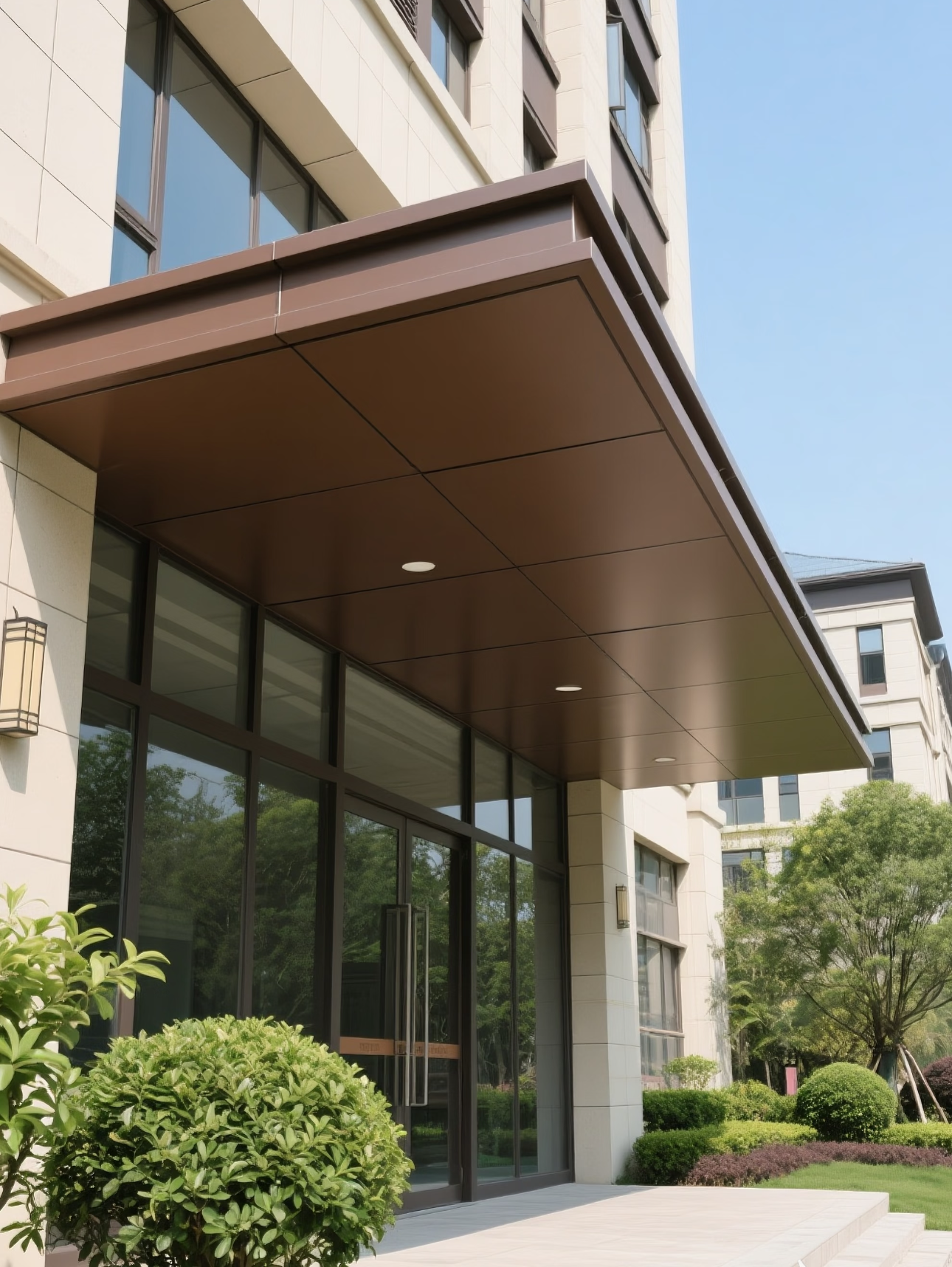
2.0-2.5mm thick aluminum veneer can be regarded as the dividing line between indoor and outdoor applications. It is an economical and practical choice for exterior walls of low-rise buildings and canopies.
For building curtain walls with a floor height of less than 20 meters, 2.0-2.5mm aluminum veneer can meet basic strength and rigidity requirements. An exterior wall project of a five-story office building used 2.0mm aluminum veneer, and after five years of use, the surface still maintains good flatness.
This thickness of aluminum veneer is also widely used in high indoor ceilings or indoor partitions with high flatness requirements. Compared with 1.5mm aluminum veneer, 2.0-2.5mm thickness provides better surface flatness and reduces deformation problems caused by temperature differences or improper installation.
In areas with mild wind and rain, 2.0-2.5mm aluminum veneer can also be used for exterior wall decoration of low-rise buildings, but it needs to be matched with a reasonable stiffener design.
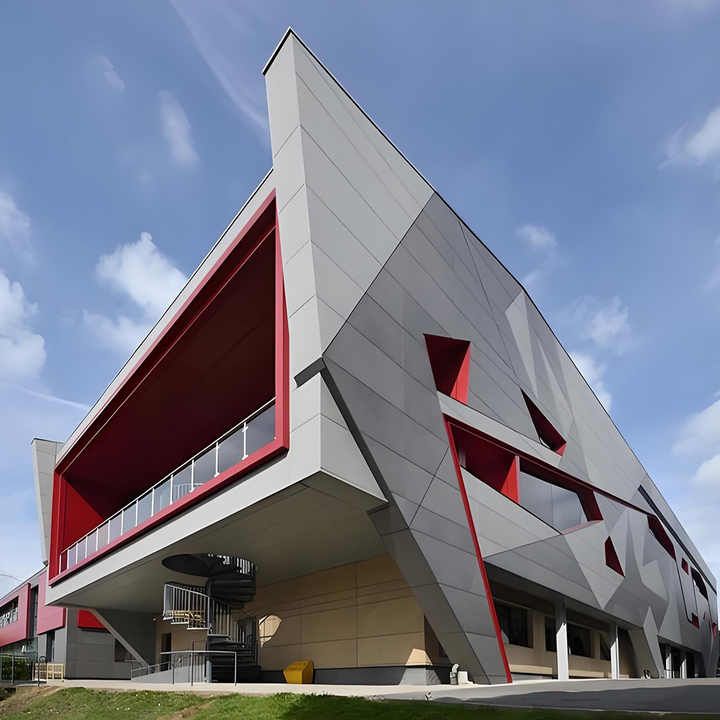
3.0mm thick aluminum veneer is mainly aimed at high-rise building curtain walls and special parts with high safety requirements.
In high-rise buildings exceeding 50 meters in height, curtain walls need to bear greater wind loads and harsher environmental conditions. With its excellent rigidity and strength, 3.0mm aluminum veneer has become the first choice for such projects.
A curtain wall project of a 180-meter super high-rise office building adopted 3.0mm aluminum veneer, combined with a scientific stiffener design, successfully withstood the test of typhoon seasons, demonstrating the reliability of this thickness of aluminum veneer.
This thickness of aluminum veneer is also often used in outdoor large billboards, overhanging structures such as canopies, and high-end projects with extremely high flatness requirements. Its thick texture can also enhance the overall quality of the building.
When selecting aluminum veneer thickness, multiple factors need to be comprehensively considered:
The use environment is the primary factor. Aluminum veneer used outdoors needs to bear wind loads and external environmental impacts, so thicker panels are usually selected. For indoor use, thinner panels can be chosen.
The application location directly affects thickness selection. Wall surfaces usually require thicker panels than ceilings. Curtain wall systems also need greater thickness compared to indoor partitions.
Panel size is closely related to thickness selection. The larger the size, the corresponding increase in required thickness to maintain sufficient flatness. Generally speaking, panels with a width exceeding 1.2 meters are not recommended to use 1.5mm thickness.
Budget constraints are also an unavoidable factor. On the premise of meeting technical requirements, the appropriate thickness can be selected according to the budget. If necessary, the insufficient thickness can be compensated by optimizing the keel system.
In actual projects, the selection of aluminum veneer thickness often needs to be comprehensively determined based on specific factors such as panel size, stiffener settings, and wind load requirements. It is recommended to consult professional curtain wall engineers for important projects and conduct necessary calculations and verifications.
Selecting the appropriate aluminum veneer thickness can not only ensure the beauty and safety of the building but also maximize economic benefits. This is a technical decision that every project manager needs to carefully consider


