The main differences between fluorocarbon sprayed aluminum veneer and polyester aluminum veneer are as follows:
1. Performance
Weather resistance:
Fluorocarbon sprayed aluminum veneer: has excellent weather resistance. Fluorocarbon resin has a stable structure and can effectively resist the erosion of ultraviolet rays. It is not easy to fade or powder in long-term outdoor use and maintains a good appearance. It can maintain stable performance in various harsh climatic conditions, such as high temperature, low temperature, acid rain, wind and sand, and its service life can reach more than 20 years.
Polyester aluminum veneer: Weather resistance is relatively weak. Although it can resist UV rays and climate change to a certain extent, its color and gloss may gradually fade in long-term outdoor use, and its general service life is about 10-15 years.
Corrosion resistance:
Fluorocarbon sprayed aluminum veneer: It has strong corrosion resistance. It can resist the erosion of corrosive substances such as acid rain, chemical fumes, industrial waste gas, etc. It is especially suitable for coastal areas and areas with heavy industrial pollution.
Polyester aluminum veneer: Corrosion resistance is slightly inferior. It has a certain resistance to general corrosive substances, but surface corrosion may occur in harsh corrosive environments.
Hardness and wear resistance:
Fluorocarbon sprayed aluminum veneer: The coating has high hardness and good wear resistance. It can withstand a certain degree of friction and collision, is not prone to scratches and wear, and can maintain good appearance quality during use.
Polyester aluminum veneer: The coating hardness is relatively low and the wear resistance is slightly poor. In the case of frequent contact or friction, surface wear may occur.
2. Appearance
Color and Gloss:
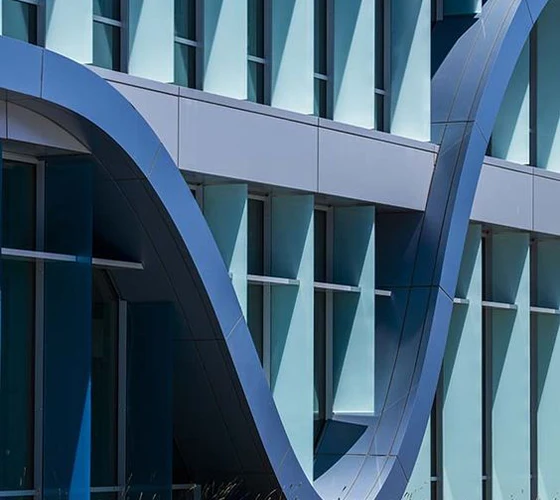
Fluorocarbon sprayed aluminum veneer: rich colors, bright and uniform colors, high gloss. Various colors and gloss can be customized according to customer needs to meet different decorative effect requirements. Due to the stability of the fluorocarbon coating, the color and gloss can remain unchanged for a long time.
Polyester aluminum veneer: also available in a variety of colors, but the color brightness and glossiness may be slightly inferior to fluorocarbon spraying. After long-term use, the color and gloss may change.
Flatness:
Fluorocarbon sprayed aluminum veneer: high surface flatness, uniform coating, no obvious unevenness or flow marks. This makes the aluminum veneer present a more beautiful and smooth appearance after installation.
Polyester aluminum veneer: It can also meet certain standards in terms of flatness, but it may not be as fine as fluorocarbon sprayed aluminum veneer.
3. Price
Cost Difference:
Fluorocarbon sprayed aluminum veneer: Due to the high price of fluorocarbon coatings and the relatively complex production process, the cost is relatively high. In the market, the price of fluorocarbon sprayed aluminum veneer is usually more expensive than polyester aluminum veneer.
Polyester aluminum veneer: The price of polyester coating is relatively low and the production process is relatively simple, so the cost is relatively low and the price is more affordable.
Cost-effectiveness considerations:
Fluorocarbon sprayed aluminum veneer: Although the price is relatively high, considering its excellent performance and long service life, it has a high cost-effectiveness for some large-scale construction projects or places of long-term use that have high requirements for decorative effects and quality.
Polyester aluminum veneer: For some projects with limited budgets, not particularly demanding requirements for decorative effects, or places for short-term use, polyester aluminum veneer is a more economical choice.
4. Applicable scenarios
Building Types:
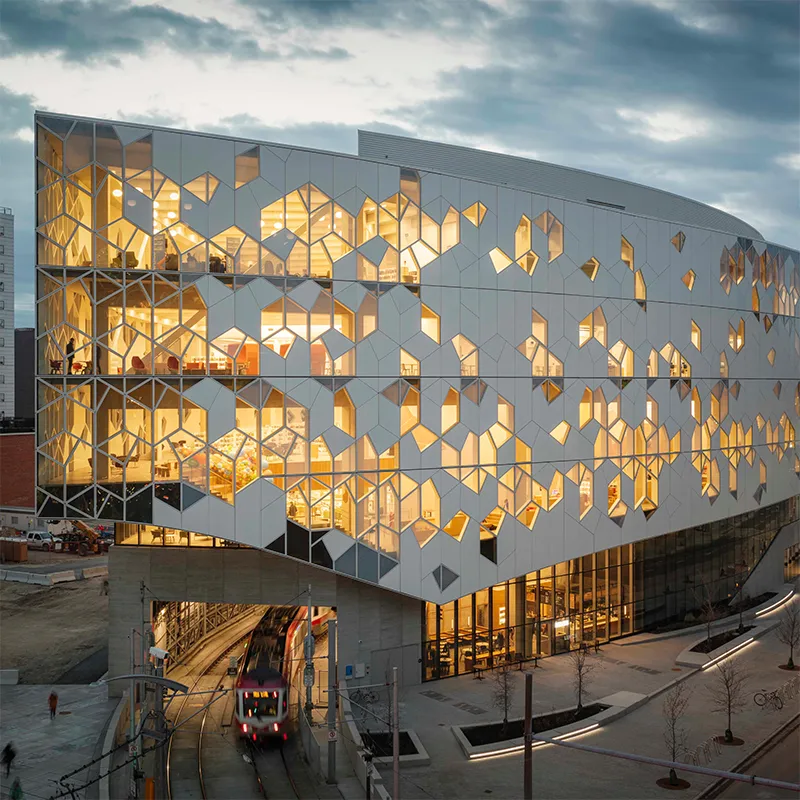
Fluorocarbon sprayed aluminum veneer: suitable for large public buildings such as high-end office buildings, hotels, commercial centers, airports, stations, as well as building exterior walls and interior decorations that require high decorative effects and durability.
Polyester aluminum veneer: commonly used in the decoration of general buildings such as ordinary office buildings, shopping malls, supermarkets, and residences, or as a decorative material for some temporary buildings, interior partitions, etc.
Environmental factors:
Fluorocarbon sprayed aluminum veneer: In harsh climatic environments, such as coastal areas, high-altitude areas, areas with strong ultraviolet radiation, etc., it can better maintain its performance and appearance, and is an ideal choice for architectural decoration in these areas.
Polyester aluminum veneer: In an environment with relatively good climatic conditions and less corrosive substances, it can meet general decoration needs.


